

"For sixty years, we have been selecting the finest leathers, working and hand-cutting them to create bespoke gloves. Our technique, the ancient Neapolitan glove-making craftsmanship, has been passed down from father to son"


We specialize in creating high-quality products.
But more than artisans, more than master glove makers, we are gold prospectors, explorers who seek to bring style to light through a color, an embroidery, a stitch. Details that, like an improvisation, stop time and make the wearer unique.
We like to tell this story because tradition is important to us; without it, or without attention to materials and the care for every single detail, we wouldn't be here, and our gloves wouldn't be in the best ateliers and showrooms in the world.
The Cut
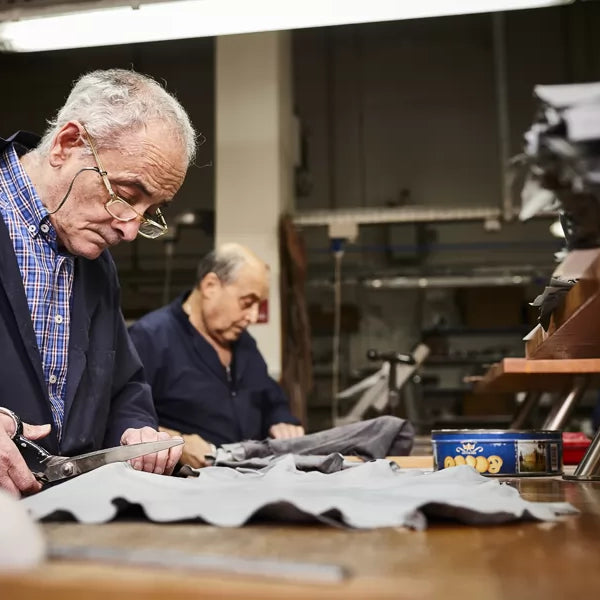
After the lengthy tanning and dyeing process, which takes place under the watchful eye of an expert, the selected leather arrives at the cutter. It is laid out on a table and hand-stretched on all sides by the artisans of the "Andreano" brand so that it can be fully flattened. This yields the various leather sections, including thumbs and "longettes," which will progressively form the finished garment through the long stages of manufacturing. In this initial phase of actual processing, the artisan's skill is essential. They cut the maximum number of gloves from the leather, avoiding its natural imperfections, using only scissors and a gauge.
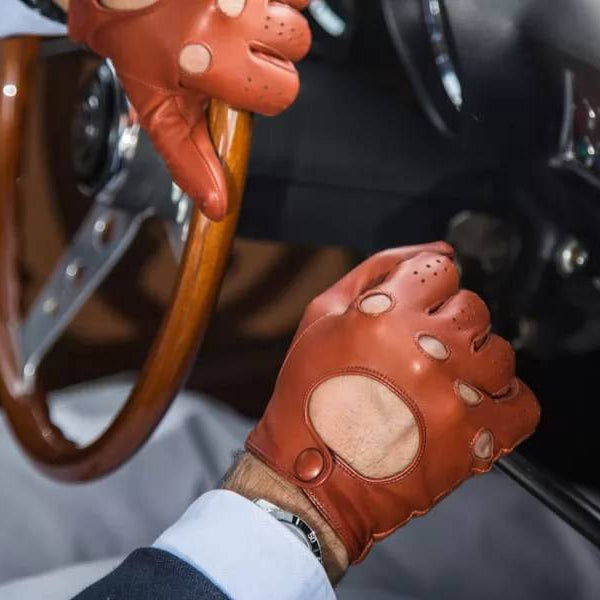
The preciousness of handmade leather gloves has ancient roots: let's discover the ancient art of Neapolitan glove makers.
The history of gloves in Naples has deep roots: it echoes in the alleyways that housed the workshops, resonates with the sound of sewing machines, and smells of fine leather from distant lands.
In Naples, handmade gloves are not just any object, nor are they an insignificant accessory. In Naples, gloves hold an almost sentimental value because they are filled with memories and tell the story of entire families who were once dedicated to the manual sewing and crafting of gloves beloved all over the world.

AN ART APPRECIATED AROUND THE WORLD
Neapolitan glove makers were already considered the best "European manufacturers" as far back as the Kingdom of the Two Sicilies. The quality and beauty of Neapolitan gloves, handmade from fine leathers with the skill and knowledge passed down through generations, were appreciated worldwide.

THE FIRST GLOVE-MAKING WORKSHOPS
It was the Bourbon dynasty that encouraged local artisan production in Naples: shirts, ties, precious fabrics used to make garments that inspired the city's appellation of "Capital of Fashion and Elegance." But Naples, during this period, also became the "Capital of Gloves." The first workshops opened on a street that is still called "Via dei Guanti Nuovi" (Street of New Gloves), behind Via Medina. Right in the heart of the city, in the Rione Sanità, entire families specialized in the production of handmade gloves. Each member had a specific role and perfected their art in one particular step among the more than twenty needed to make a pair of gloves.

The Sanità Quarter
The Neapolitan district that was the birthplace of the great Antonio De Curtis, also known as Totò, was the industrious hub of the entire city. Alleys and workshops full of artisans proudly carried their family names and their gloves beyond Italian borders. Even Afragola, Casalnuovo, and Casavatore hosted tanneries and other family businesses that contributed to the final packaging of the gloves, for example, those responsible for packaging and those responsible for labels.
About 94 percent of all "Made in Italy" gloves came from the Neapolitan district. In fact, 40 percent of the production was destined for the domestic market and 60 percent was for the international market.

A Family Tradition
The creation of handmade leather gloves, according to Neapolitan tradition, is a complex process that requires over twenty steps from the hide to the finished product. In Naples, a city of contrasts and wonders, these refined accessories were born in modest workshops and basements, only to be appreciated worldwide.
The manufacturing process involved entire families organized in an almost industrial manner: design, cutting, sewing, and finishing were distinct tasks. In particular, the cutting of the leather, entrusted to expert hands after careful selection, was fundamental for enhancing the material.
This collective activity, based on collaboration and solidarity, aimed to build a future through new challenges and markets, effectively anticipating modern forms of production organization.
The Post-War Crisis
As in many other social contexts, handicrafts also suffered a severe blow in the post-war period. The overwhelming power of the economies of the East and faraway Asia caused enormous damage. Over time, unfortunately, the world's oldest tradition of glove making gave way to less refined, less fashion-conscious but extremely cheaper manufacturing processes. Many workshops closed down, and only a few were able to continue their art by offering their talent to foreign manufacturers who seized the advantages.

Andreano. Handmade leather gloves, since 1958 in Naples.
Nowadays, the best glove makers in the world are found in Naples or originate from there. Fortunately, there are still some businesses that base their daily operations on the same importance of handed-down knowledge and the quality of human relationships.
Among the active bulwarks and supporters of the ancient Neapolitan glove-making art is Andreano. A story, passed down from father to son, that began more than sixty years ago and continues to have the same desire today to make beautiful, high-quality gloves, paying attention to every detail and following all the rules of the artisans in Naples for the creation of handmade leather gloves.
The preciousness of handmade leather gloves has ancient roots: let's discover the ancient art of Neapolitan glove makers.
The history of gloves in Naples has deep roots: it echoes in the alleyways that housed the workshops, resonates with the sound of sewing machines, and smells of fine leather from distant lands.
In Naples, handmade gloves are not just any object, nor are they an insignificant accessory. In Naples, gloves hold an almost sentimental value because they are filled with memories and tell the story of entire families who were once dedicated to the manual sewing and crafting of gloves beloved all over the world.
AN ART APPRECIATED AROUND THE WORLD
Neapolitan glove makers were already considered the best "European manufacturers" as far back as the Kingdom of the Two Sicilies. The quality and beauty of Neapolitan gloves, handmade from fine leathers with the skill and knowledge passed down through generations, were appreciated worldwide.
THE FIRST GLOVE-MAKING WORKSHOPS
It was the Bourbon dynasty that encouraged local artisan production in Naples: shirts, ties, precious fabrics used to make garments that inspired the city's appellation of "Capital of Fashion and Elegance." But Naples, during this period, also became the "Capital of Gloves." The first workshops opened on a street that is still called "Via dei Guanti Nuovi" (Street of New Gloves), behind Via Medina. Right in the heart of the city, in the Rione Sanità, entire families specialized in the production of handmade gloves. Each member had a specific role and perfected their art in one particular step among the more than twenty needed to make a pair of gloves.
The Sanità Quarter
The Neapolitan district that was the birthplace of the great Antonio De Curtis, also known as Totò, was the industrious hub of the entire city. Alleys and workshops full of artisans proudly carried their family names and their gloves beyond Italian borders. Even Afragola, Casalnuovo, and Casavatore hosted tanneries and other family businesses that contributed to the final packaging of the gloves, for example, those responsible for packaging and those responsible for labels.
About 94 percent of all "Made in Italy" gloves came from the Neapolitan district. In fact, 40 percent of the production was destined for the domestic market and 60 percent was for the international market.
A Family Tradition
The creation of handmade leather gloves, according to Neapolitan tradition, is a complex process that requires over twenty steps from the hide to the finished product. In Naples, a city of contrasts and wonders, these refined accessories were born in modest workshops and basements, only to be appreciated worldwide.
The manufacturing process involved entire families organized in an almost industrial manner: design, cutting, sewing, and finishing were distinct tasks. In particular, the cutting of the leather, entrusted to expert hands after careful selection, was fundamental for enhancing the material.
This collective activity, based on collaboration and solidarity, aimed to build a future through new challenges and markets, effectively anticipating modern forms of production organization.
The Post-War Crisis
As in many other social contexts, handicrafts also suffered a severe blow in the post-war period. The overwhelming power of the economies of the East and faraway Asia caused enormous damage. Over time, unfortunately, the world's oldest tradition of glove making gave way to less refined, less fashion-conscious but extremely cheaper manufacturing processes. Many workshops closed down, and only a few were able to continue their art by offering their talent to foreign manufacturers who seized the advantages.
Andreano. Handmade leather gloves, since 1958 in Naples.
Nowadays, the best glove makers in the world are found in Naples or originate from there. Fortunately, there are still some businesses that base their daily operations on the same importance of handed-down knowledge and the quality of human relationships.
Among the active bulwarks and supporters of the ancient Neapolitan glove-making art is Andreano. A story, passed down from father to son, that began more than sixty years ago and continues to have the same desire today to make beautiful, high-quality gloves, paying attention to every detail and following all the rules of the artisans in Naples for the creation of handmade leather gloves.
Blog posts

Time to make your gloves.

Where is Martha? “Dreams Under the Tree”?

Cut and sew


